 How-to
Reduce Mineral Buildup in Pipes: A Homeowner's Guide
Last Updated: November 12, 2026
Quick Summary
To reduce mineral buildup in pipes, match the treatment to the pipe material: soak accessible fixtures and drain openings in a 50/50 white vinegar and water mix, but address scale inside pressurized supply lines through water treatment or a plumber, since vinegar cannot reach it. Test your water hardness first to decide whether you clean fixtures or treat the whole supply.
- A hardness test kit measures calcium and magnesium in grains per gallon, with above 10.5 rated very hard.
- Soak showerheads and aerators in diluted vinegar monthly and replace aerator screens when they crust over.
- Water softeners remove calcium and magnesium through ion exchange, stopping mineral buildup at the source.
- Keep vinegar contact on copper short and rinse thoroughly, because acidic soaks can pit the wall.
- Call a plumber if flow is severely restricted at more than one fixture or scale returns within weeks.
Table of Contents
- What Causes Calcium Buildup in Pipes
- What Breaks Down Calcium Deposits in Pipes
- Hard Water Pipe Buildup Prevention That Works
- Choosing a Water Softener for Hard Water
- Frequently Asked Questions
What Causes Calcium Buildup in Pipes
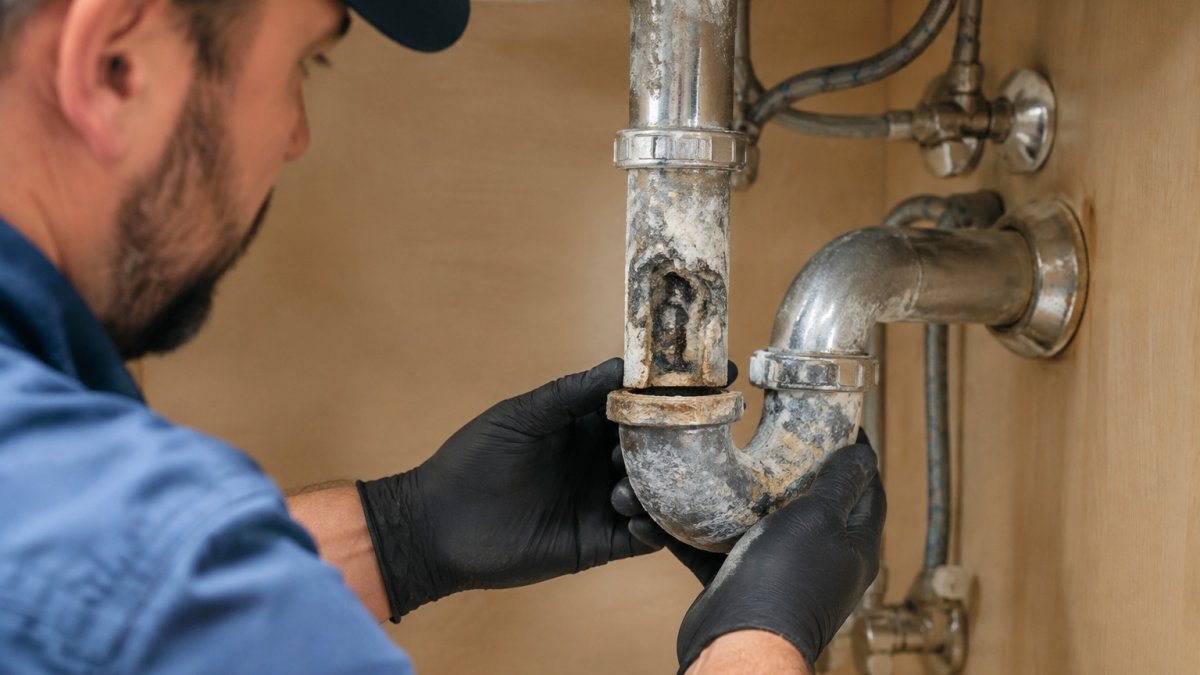
Hard water leaves calcium behind every time it runs through your pipes. Water picks up dissolved calcium carbonate and magnesium as it moves through rock and soil, and heat and pressure force those minerals onto pipe walls, fixtures, and the inside of your water heater, forming a crust that narrows the pipe and slows flow. How to Fix Hard Water Damage in Las Vegas Homes shows what that buildup does to local plumbing. That is the core of how to reduce mineral buildup in pipes: understand where the minerals land, then attack them there.
What Breaks Down Calcium Deposits in Pipes
Before you pour anything into a pipe, identify what you are treating. Deposits in a drain opening are not the same problem as scale inside a pressurized supply line.
Drain openings and traps. The buildup here is a mix of soap scum, hair, and mineral crust sitting in an open channel. White vinegar works because the acetic acid reacts with calcium carbonate and softens it.
Pressurized supply lines. Scale here forms a hard ring on the inside wall of a pipe you cannot reach with a brush. Gold Medal Service's guide to calcium removal draws a clear line between accessible fixtures and supply lines, noting that vinegar does not transfer to the inside of a pressurized pipe. Supply-line scale is addressed at the source, through water treatment, or by a plumber who can assess flow loss and pipe condition. How to Spot Why Your Las Vegas Pipes Fail Early explains the warning signs of failing pipe.
Match the method to the pipe material. This is where most DIY damage happens:
- Copper: Acidic soaks left too long can pit the wall and leave copper salts behind. Keep vinegar contact short, rinse thoroughly, and never leave an acidic product sitting in a closed copper line.
- Galvanized steel: The zinc coating is already thinning in older pipe. Aggressive descalers accelerate corrosion and can loosen rust that then blocks flow; gentle methods and low pressure are safer.
- PVC and CPVC: Chemically tolerant of most descalers, but solvent-welded joints and rubber seals are the weak point. Check the label for plastic compatibility and keep temperatures within the pipe's rating.
- Older plumbing with lead solder or brass fittings: Acidic products can leach metals into the water. Flush thoroughly after treatment and do not drink from a treated line the same day without flushing.
Handle chemicals like chemicals. Ventilate, wear gloves and eye protection, and never mix a descaler with bleach or another cleaner, the reaction can release toxic gas.
Match the treatment to the pipe material, because the wrong method can damage the line.
| Pipe material | Risk | What to do |
|---|---|---|
| Copper | Acidic soaks can pit the wall | Keep vinegar contact short, rinse thoroughly |
| Galvanized steel | Aggressive descalers accelerate corrosion | Use gentle methods and low pressure |
| PVC and CPVC | Solvent-welded joints and rubber seals are the weak point | Check label for plastic compatibility |
| Older plumbing with lead solder or brass | Acidic products can leach metals into water | Flush thoroughly after treatment |
Hard Water Pipe Buildup Prevention That Works
Prevention starts with diagnosis, not with a product. Before you buy anything, find out whether the problem is localized or system-wide.
Test the water. A hardness test kit measures calcium and magnesium in grains per gallon (gpg): under 3.5 is soft, 3.5 to 7 moderately hard, 7 to 10.5 hard, and above 10.5 very hard. Test at a tap that does not pass through a softener, and test both a cold and a hot line, a hot-only reading that is much worse points to scale in the water heater. Understanding the geological origins of these dissolved solids provides a guide to hard water and helps clarify why your specific plumbing system might be accumulating mineral deposits so rapidly.
Read the symptoms. Scale on one showerhead and a chalky ring in one toilet is a localized fixture problem. Reduced flow at multiple fixtures, cloudy glassware, and scale in the water heater point to whole-house hardness. That distinction decides whether you clean fixtures or treat the supply.
Maintenance that actually helps:
- Wipe fixtures dry after use to stop chalky residue from hardening
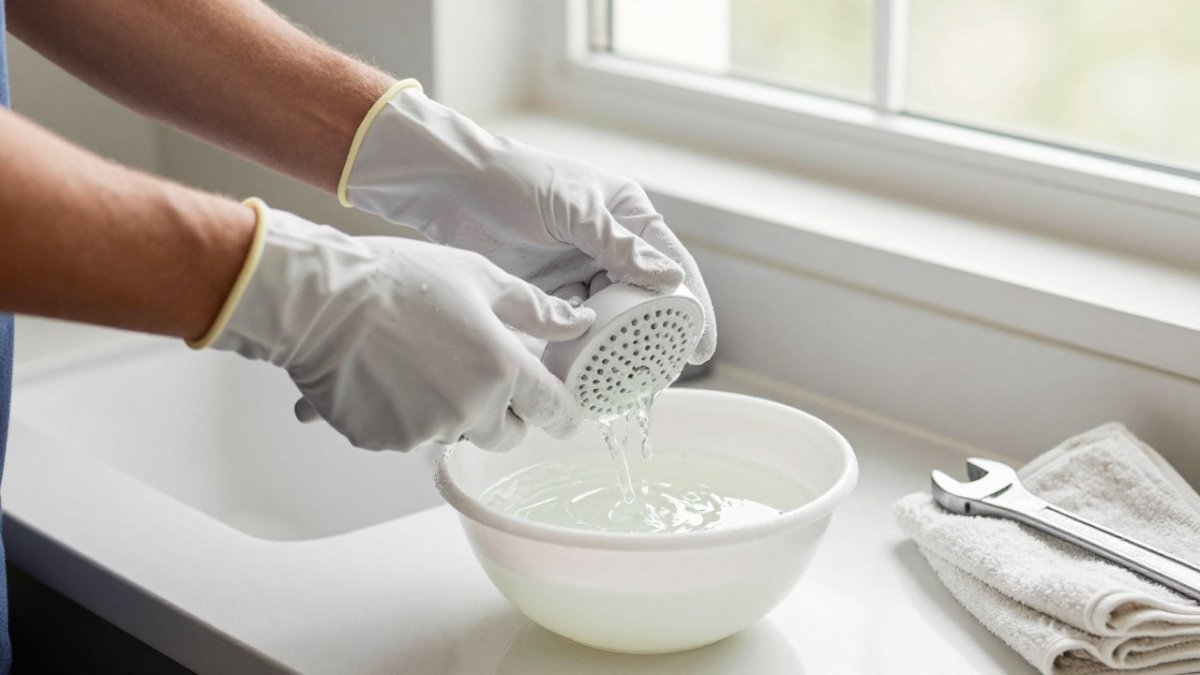
- Soak showerheads and aerators in diluted vinegar monthly, and replace aerator screens when they crust over
- Flush drains with hot water to clear early mineral deposits before they bind
- Address slow drains early, cheaper to clear than a blocked one
- Lower the water heater setpoint within a safe range to slow scale formation
Prevention options and what each can realistically do:
- Water softeners (ion exchange): Remove calcium and magnesium before they enter the plumbing. This is the most proven whole-house fix, but it adds sodium to the water, needs salt replenishment and periodic regeneration, and requires sizing to household demand and hardness level.
- Scale-control devices (template-assisted or magnetic): Marketed to change how scale precipitates without removing minerals. Evidence for whole-house effectiveness is mixed, so treat them as a supplement, not a substitute for softening.
- Point-of-use treatment: A softener or filter on a single appliance line protects that appliance but leaves the rest of the plumbing untouched.
- Mechanical descaling: Periodic professional descaling of the water heater and accessible lines removes what has already formed; it prevents nothing on its own.
Not all scale is bad. Tap Score's analysis of scale and corrosion notes that moderate scale can shield pipes from corrosion, while too much restricts flow. The goal is control, not zero scale, chasing a perfectly scale-free pipe can push you toward over-treatment that shortens pipe life.
Browse more how-to guides from Resolution Plumbing for step-by-step maintenance.
Choosing a Water Softener for Hard Water
A water softener removes calcium and magnesium through ion exchange, which stops mineral buildup at the source. Size the unit to your household and hardness level. For severe buildup, compare whole house repiping costs in Las Vegas before committing to treatment alone.
EPA guidance on water hardness and treatment is a useful starting point for understanding what softeners do and do not fix. Get multiple estimates and compare the work quoted, not just the price. At Resolution Plumbing, we quote the job upfront so you know what you are paying for.
Hard water will keep testing your pipes. A water softener, regular descaling, and an early call when flow drops are how you stay ahead of it. Resolution Plumbing offers upfront pricing, same-day appointments, and licensed, insured plumbers for water treatment and drain work.
Frequently Asked Questions
What dissolves mineral buildup in pipes?
White vinegar and commercial calcium-lime-rust removers are the two common options, but they work differently. Vinegar handles mineral deposits on accessible fixtures, showerheads and drain openings. Commercial descalers are stronger but can damage certain pipe materials if left too long, so check the label against your pipe type. Neither removes scale from inside pressurized supply pipes the way a whole-home water softener does. At Resolution Plumbing, we recommend getting multiple estimates so you can compare prices and the work to be performed before committing.
Can hard water deposits clog household pipes?
Yes, over time. Hard water leaves calcium carbonate and magnesium behind as scale accumulation on the pipe interior, and that narrowing causes reduced water flow and slow drains. Moderate scale can actually shield pipes from corrosion, so the goal is control rather than stripping every trace. If several fixtures have lost pressure at once, that points to system-wide buildup rather than one clogged drain, and a plumber should inspect before you treat anything.
How do you prevent mineral buildup from returning?
Hard water pipe buildup prevention starts with testing your water hardness, then treating the source. A water softener for hard water removes calcium and magnesium through ion exchange before they reach your pipes and fixtures. Beyond that, flush the water heater on schedule, soak showerheads and aerators in diluted vinegar every few months, and fix slow drains early. Resolution Plumbing installs water treatment systems for homeowners dealing with recurring chalky residue and scale.