 how-to
Whole House Repiping Estimate: What Las Vegas Homeowners Pay
Last Updated: November 4, 2026
Quick Summary
A whole house repiping estimate in Las Vegas typically falls between $4,500 and $15,000, with most homeowners landing between $8,000 and $11,000. A proper repiping estimate itemizes pipe and fittings, labor, drywall patching, permit fees, and disposal of the old lines.
- Most homeowners pay near $8,669 for a whole-house repipe, with projects ranging from roughly $4,334 to $16,254.
- Copper costs roughly double PEX in material and fitting cost.
- Large custom estates can push repiping costs past $25,000.
- The most common surprise charge is drywall repair, which some quotes exclude entirely.
- A complete estimate should name the pipe material and list exclusions in writing.
Table of Contents
- What a Whole House Repiping Estimate in Las Vegas Really Covers
- Whole-House Repiping Cost: What Homeowners Actually Pay
- What Should a Repiping Estimate Include?
- PEX vs. Copper Repiping: Which Fits Your Home
- Repiping Time and Process: What the Work Week Looks Like
- Hard Water, Polybutylene, and the Pipes Behind Early Failures
- Get a Free Whole House Repiping Estimate
- Frequently Asked Questions
What a Whole House Repiping Estimate in Las Vegas Really Covers
A whole house repiping estimate in Las Vegas typically falls between $4,500 and $15,000, according to Nevada Real Estate Group's 2026 guide to polybutylene plumbing, with most homeowners landing somewhere between $8,000 and $11,000. At Resolution Plumbing, we build every repiping estimate around three things: the pipe material in your walls, the size and layout of your home, and how much access the job requires. A quote that skips any of those is a guess, not an estimate.
Here's what most homeowners get wrong. They call three plumbers, collect three numbers, and pick the cheapest one. But the number itself tells you almost nothing until you know what's inside it. A $6,000 quote and a $12,000 quote can describe the same job with wildly different scopes.
A proper repiping estimate typically itemizes pipe and fittings, labor, drywall patching, permit fees, and disposal of the old lines.
Signs Your Pipes Are Due for Replacement
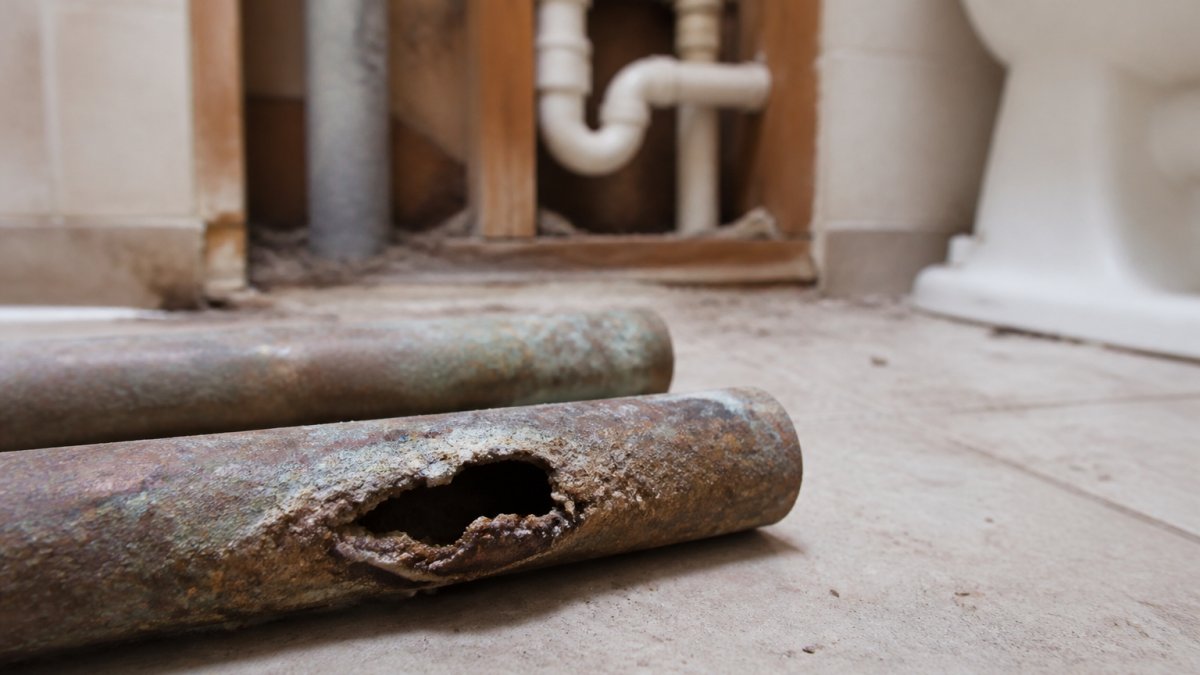
The clearest signals are rusty or discolored water at the tap, pressure that drops when two fixtures run at once, and pinhole leaks that keep coming back in the same wall. Polybutylene supply lines, common in homes built between the late 1970s and mid-1990s, are a separate category entirely. Those pipes fail at fittings without warning, and many insurers now refuse to cover homes that still have them.
If you're seeing any of these, our guide on how to spot why your Las Vegas pipes fail early walks through the causes behind each symptom.
Whole-House Repiping Cost: What Homeowners Actually Pay
Most homeowners pay somewhere near $8,669 for a whole-house repipe, based on Kaamcam's 2026 cost data, with individual projects ranging from roughly $4,334 to $16,254. That spread is wide because repiping is priced by the house, not by a flat rate.
| Cost Factor | Typical Range | What Drives It |
|---|---|---|
| Pipe material | Copper costs roughly double PEX | Material and fitting cost |
| Home size | $4,500 small single-story to $25,000+ custom estate | Linear feet of pipe, fixture count |
| Access | Standard to high | Slab-on-grade, finished walls, second stories |
| Permit and inspection | Varies by scope | Clark County permit requirements |
| Drywall repair | Varies by scope | Number of access openings |
A national benchmark puts whole-home repiping near $7,500, per Geek Powered Studios' 2026 repiping cost analysis, which tells you local conditions push the number up rather than down.
Why Las Vegas Quotes Run Higher or Lower
Three things move a quote most: material choice, access difficulty, and whether the home still has polybutylene. Slab-on-grade construction and finished walls can add labor because access points have to be opened and closed again. And polybutylene removal carries its own handling and disposal considerations.
Large custom estates can push past $25,000, according to Active Plumbing's 2026 breakdown by home size. The lesson: treat any quote given over the phone as a placeholder until someone has walked the house.
Repair or Repipe? A Decision Framework
The estimate question homeowners actually need answered is whether to patch the current system or replace it. Use these general considerations as a starting point, then confirm with a licensed plumber:
- One isolated leak, newer pipe: A plumber can assess whether a single repair is practical.
- Recurring leaks in different locations: These can point to broader system wear, which a plumber can evaluate.
- Polybutylene in the supply lines: Has known failure risks; discuss replacement with a licensed plumber.
- Galvanized steel with rust-colored water: Interior corrosion may limit the value of spot repairs.
- Copper with clustered pinhole leaks: A plumber can test water and pressure to identify the cause.
That math changes if you plan to sell soon, disclose requirements and buyer inspections can affect timing.
What Moves an Estimate Up or Down
- Pipe material: PEX and copper differ in material cost and expected service life.
- Access strategy: Running lines through the attic versus opening finished walls changes labor hours more than any other single factor.
- Fixture count: Each bathroom, kitchen, and outdoor hose bib adds tie-ins and test points.
- Permit scope: Permit and inspection fees can depend on the work described.
- Restoration: Drywall patching, texture, and paint are frequently excluded; ask for them as a line item.
When comparing quotes, review line items rather than totals, since scope differences such as drywall restoration, permit fees, or old-pipe disposal can vary.
What Should a Repiping Estimate Include?
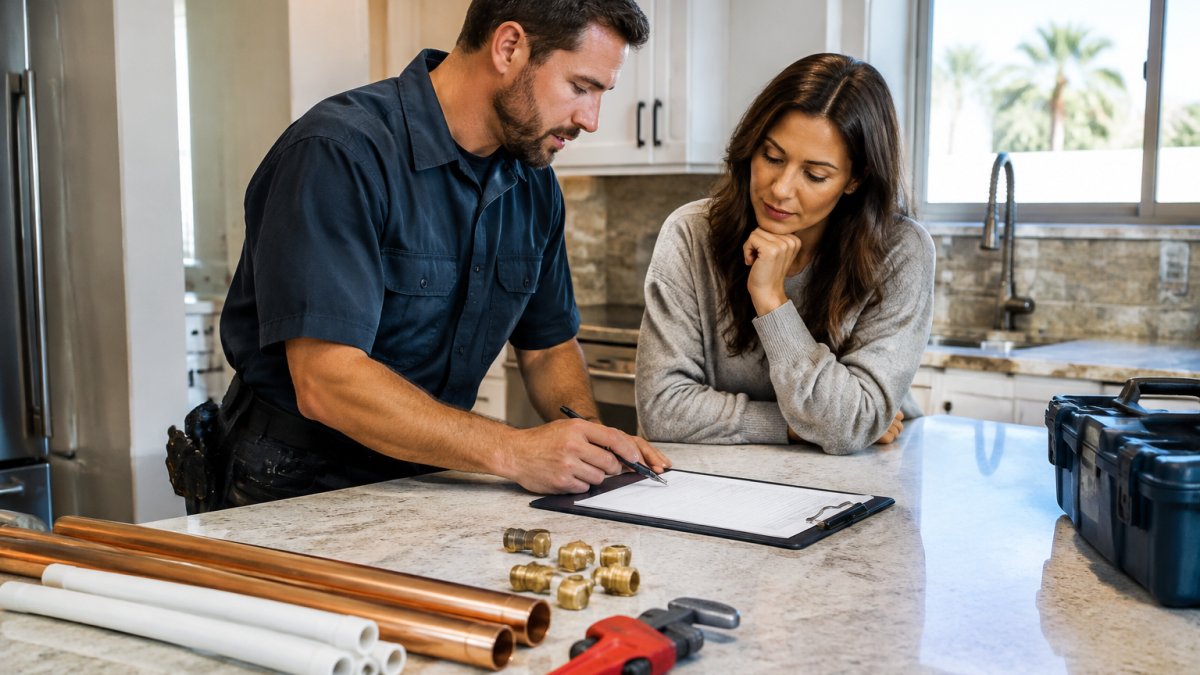
A complete repiping estimate should itemize pipe and fittings, labor, permit fees, drywall patching, old-pipe disposal, and a stated timeline. It should also name the pipe material and list exclusions in writing. If a quote is one lump sum with no breakdown, ask for the detail before you compare it to anything.
Here's the checklist we'd use to review any repiping quote:
- Pipe material named (PEX or copper) with brand and grade
- Linear feet or fixture count stated
- Permit and inspection fees listed separately
- Drywall patching and texture included or explicitly excluded
- Old pipe removal and disposal included
- Start date and estimated duration in writing
- Warranty terms on materials and labor
- Payment schedule tied to milestones, not upfront
Watch out: the most common surprise charge is drywall repair. Some quotes exclude it entirely, and homeowners discover a second bill once the walls are open.
PEX vs. Copper Repiping: Which Fits Your Home
PEX and copper each have trade-offs in cost, installation, and lifespan, and the right choice depends on your home and budget.
| Feature | PEX | Copper |
|---|---|---|
| Material cost | Lower | Roughly double PEX |
| Installation speed | Faster, fewer joints | Slower, more joints |
| Expected service life | Long | Longest |
| Hard water resistance | Good | Prone to pitting over time |
| Best for | Most standard homes | Budget-flexible, long-horizon owners |
Repiping Time and Process: What the Work Week Looks Like
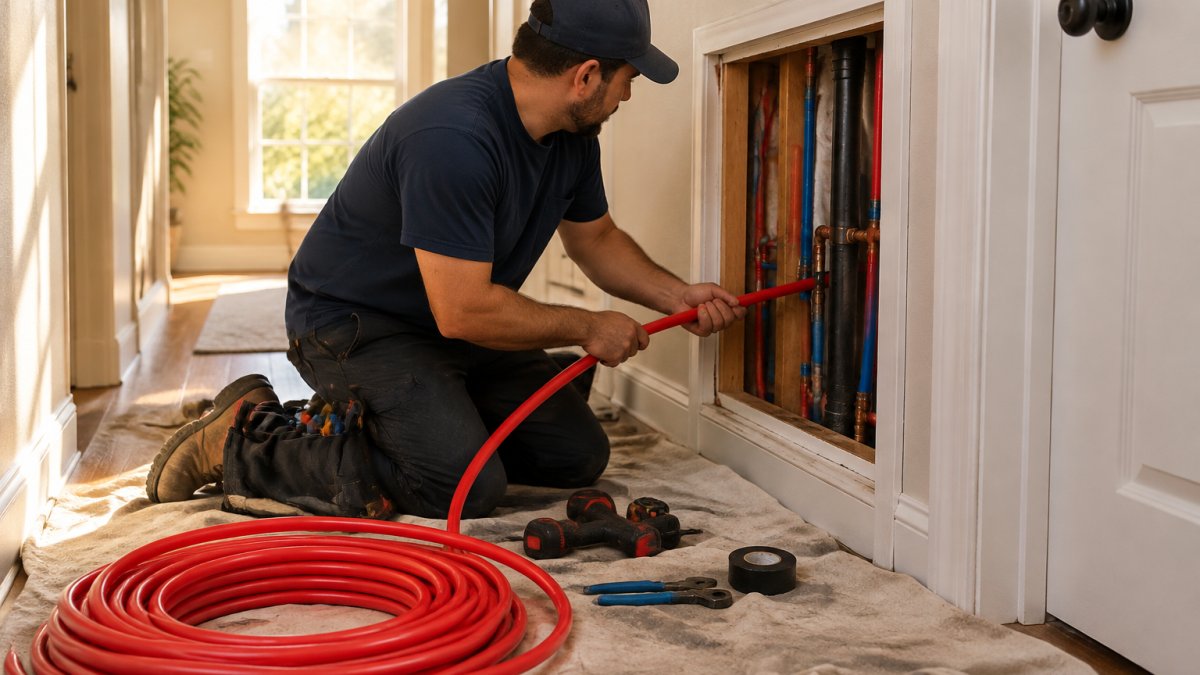
The typical sequence:
- Walkthrough and shutoff, with fixture protection in place
- New lines pulled through walls, attic, or crawlspace
- Fixture tie-ins and pressure testing
- Inspection by the permitting authority
- Drywall patching, texture, and cleanup
Hard Water, Polybutylene, and the Pipes Behind Early Failures
Hard water is the quiet accelerant behind a lot of premature plumbing failure. Hard water can carry high mineral content, and those minerals can deposit as scale on the inner wall of pipes. Scale narrows the passage, roughens the pipe surface, and gives corrosion a place to start. Over years, that shows up as restricted water flow, low water pressure at the far fixtures, and a water heater working harder than it should.
Polybutylene adds a second problem.
Symptom-to-Cause: Read the Clue Before You Call
Most homeowners treat every leak or low-flow complaint as the same problem. It isn't. Use this guide to narrow the likely cause before a plumber arrives:
| What You Notice | Likely Cause | What It Means |
|---|---|---|
| Gradual pressure drop at far fixtures, scale on aerators | Hard-water mineral buildup | Interior diameter is narrowing; water treatment may help |
| Rusty or brown water at one tap | Localized corrosion or a failing fixture supply | Isolate the fixture before assuming the whole system is gone |
| Pinhole leaks that reappear in clusters | Aggressive water chemistry wearing copper thin | Water and pressure testing needed before repair decisions |
| Sudden burst with no warning, gray plastic pipe | Polybutylene fitting failure | Replace the system; spot repairs don't stop the pattern |
| Pressure spikes when appliances cycle | High household pressure or missing regulator | A pressure-reducing valve may protect the whole system |
| Sediment in the water heater, popping sounds | Mineral scale in the tank | Flush the tank and consider softening |
Material-by-Material Prevention
- Copper: Keep household pressure in the normal residential range and test water chemistry if pinholes cluster. Have exposed copper inspected every few years.
- Galvanized steel: Expect interior corrosion to progress; flushing helps little once rust-colored water appears. Plan for replacement rather than repeated repairs.
- Polybutylene: No maintenance extends its life reliably. Identify it, disclose it, and budget for replacement.
- PEX: Resists scale and corrosion well, but protect it from UV exposure and excessive pressure; confirm fittings match the manufacturer's system.
Practical Steps You Can Take Safely
- Check your water pressure with a gauge on an outdoor hose bib; note readings at different times of day.
- Look for scale on faucet aerators and showerheads, a sign of mineral load.
- Inspect exposed pipes in the garage, attic, or basement for corrosion, discoloration, or gray plastic.
- Flush the water heater annually to slow sediment buildup.
- Call a licensed plumber if you see active leaks, pressure above normal residential ranges, or recurring pinholes.
Distinguishing the causes matters. Hard-water damage tends to build gradually: falling pressure, scale at aerators, sediment in the water heater. Polybutylene and joint failure tend to arrive suddenly: a burst pipe with no warning and water damage behind a wall. Age-related copper failure sits in between, with pinhole leaks that reappear in clusters.
Fixing the pipe without addressing the water means the new system starts accumulating scale on day one. Water treatment can be part of the conversation when planning a repipe, and you can review water softener options to learn more.
Get a Free Whole House Repiping Estimate
A repiping estimate is only useful if it's built on an actual walkthrough, and that's exactly what we provide. Resolution Plumbing is family-owned, fully licensed and insured under License #0086893, and we price the job upfront with no hidden fees. Our plumbers are background-checked and drug-tested, and we offer same-day appointments for urgent problems.
You can request repiping service and see what the work involves before you commit, or review our pricing page for current information, or contact our team to schedule your free estimate.
Frequently Asked Questions
How much does it cost to repipe a whole house?
Whole-house repipe pricing depends on home size, pipe material, and access, so the reliable figure is the written estimate for your home after a walkthrough. The only reliable number is the one written on your own repiping estimate, after a plumber has walked the house and checked pipe material, access points, and fixture count.
What factors affect a whole-house repiping estimate?
Home size and story count matter most, since a two-story house needs more pipe and more wall access. Pipe material drives the rest: copper costs roughly double PEX. Slab-on-grade construction, finished walls, and tight crawlspaces add labor. So does the number of fixtures, whether the main line is included, and whether drywall repair is part of the bid. Homes with polybutylene piping can involve additional removal and disposal work.
How long does it take to repipe a house, and can I stay in it?
Project length depends on the size and layout of the home, and your plumber can provide a schedule for your project. Expect noise, some wall openings, and a day or two without water if the main line is being replaced. Ask your plumber for a day-by-day schedule in writing before work starts.
Does hard water cause pipes to need replacement?
Hard water does not dissolve copper or PEX, but the mineral scale it leaves behind narrows the inside of pipes and roughens the surface. That restricted water flow shows up as low pressure at fixtures and a water heater that works harder and fails sooner. Scale also stresses joints. Water treatment options are one thing to discuss with a licensed plumber when evaluating your system.
Your pipes have already told you something is wrong. The only question left is what the fix actually costs, and we'd rather show you the number in person than guess at it over the phone. Get started with Resolution Plumbing and get an upfront repiping estimate built around your home, your pipe material, and your timeline.