 listicle
Are Your Water Heater Warning Signs Urgent?
Last Updated: November 4, 2026
Quick Summary
Water heater replacing is usually needed when the unit is past roughly 8 to 12 years of age, leaks from the bottom of the tank, produces rusty water, or makes popping or rumbling noises. Multiple warning signs at once, or a repair costing more than half the price of a new unit, point strongly toward water heater replacing rather than repair.
- Tank-style water heaters commonly last roughly 8 to 12 years.
- Past about 75 percent of expected life, replacement usually beats repair.
- A tank leaking from the bottom usually means internal corrosion that cannot be repaired.
- If a single repair costs more than about half a new unit, consider replacement.
- Check the tank warranty and whether labor is covered before deciding.
Table of Contents
- Why Water Heater Age Is the First Warning Sign
- Signs Your Water Heater Needs Replacing: Leaks and Water Pooling
- Rusty, Discolored, or Smelly Hot Water
- Lukewarm Water, Shortages, and Noises From the Tank
- Repair or Replace: A Practical Decision Framework
- Water Heater Maintenance and Flushing: Can It Extend Service Life?
- Booking Your Water Heater Assessment With Resolution Plumbing
- Frequently Asked Questions
Water heaters rarely announce their decline, but recognizing the signs that water heater replacing is needed can prevent a sudden cold shower or flood. One day the shower runs hot, and the next it turns lukewarm, rusty, or surprisingly loud. Knowing the warning signs early can save a homeowner from a cold shower or a flooded utility closet. This guide walks through the signs your water heater needs replacing, explains which symptoms are urgent, and helps you decide whether water heater replacing or repair makes sense.
Why Water Heater Age Is the First Warning Sign
Age is the first thing to check, because a water heater's tank wears from the inside out as sediment and corrosion accumulate, and the risk of an unexpected failure climbs sharply once a unit passes its expected service window. Tank-style units commonly last roughly 8 to 12 years, while tankless units often run longer with proper maintenance. Gas and electric tank models fall in similar ranges, though hard-water areas tend to shorten tank life because sediment builds faster.
How to Find and Decode the Manufacture Date
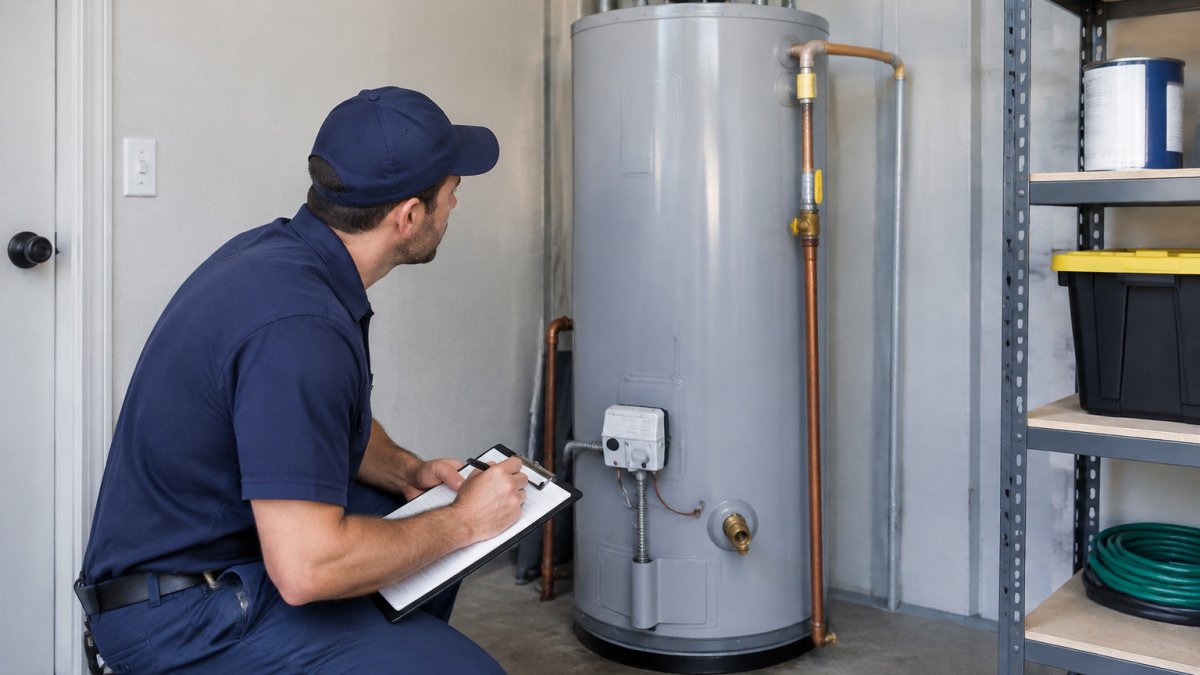
The manufacture date is usually printed on a label near the top or side of the tank, or on a sticker on the access cover. Most manufacturers encode the date in the serial number rather than printing it plainly. Many manufacturers encode the date in the serial number, and the exact format varies by brand. If the label is faded or missing, check the owner's manual, the manufacturer's website serial-number lookup, or call the manufacturer with the model and serial numbers. Write the date down and keep it with your home records.
Check the Warranty Before You Decide
Warranty terms matter as much as age. Warranty terms vary by manufacturer and model, so check the documentation that came with your unit. Locate your warranty document or look up the terms by model number, and note two things: whether the tank is still covered, and whether labor is included. A unit still under a tank warranty changes the repair-versus-replace math, because a covered tank failure may cost far less to resolve than an out-of-warranty one.
Watch out: a warranty that covers the tank rarely covers labor or the cost of disposing of the old unit, so confirm what is actually reimbursed before assuming a covered failure is free.
If the unit is approaching or past its expected life, begin replacement planning even if it still works. A healthy-looking unit can fail without much notice at that stage, and planning ahead lets you compare models and schedule installation instead of paying emergency rates.
Signs Your Water Heater Needs Replacing: Leaks and Water Pooling
A leak is one of the clearest signals that a water heater needs attention. Water around the base, on the floor beneath the tank, or dripping from fittings deserves a quick investigation. Some leaks come from a loose connection or a faulty pressure relief valve, which a plumber may be able to fix. Others point to a failing tank, and that usually means replacement.
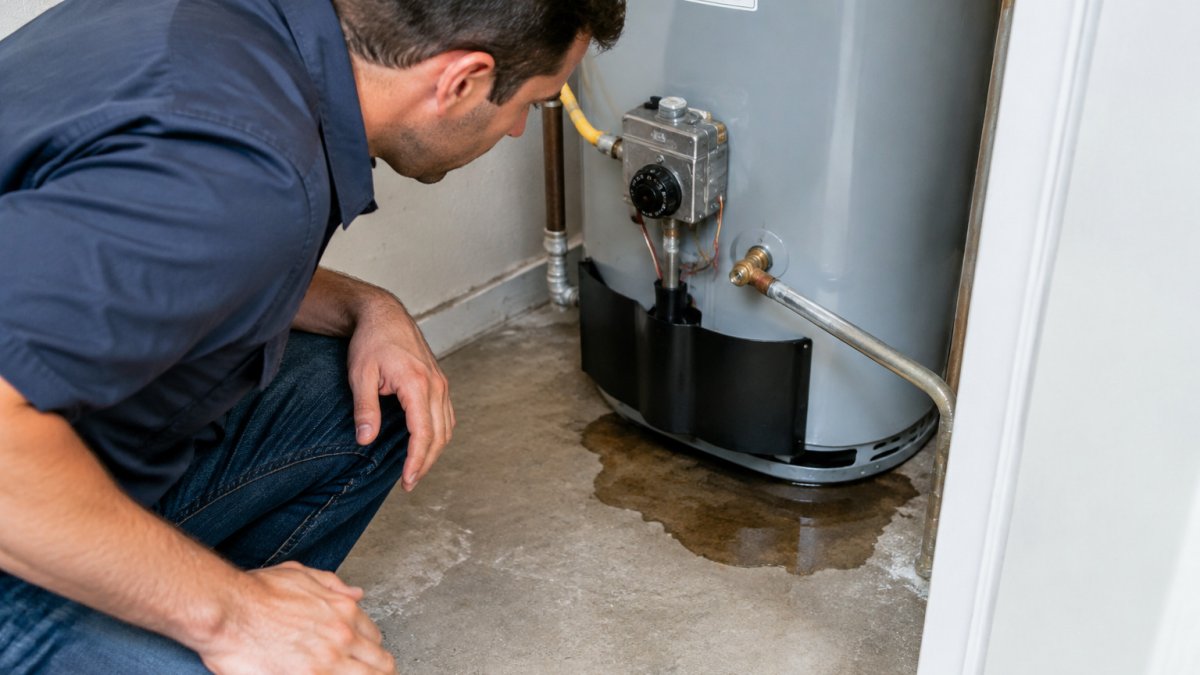
Turn off the power or gas supply before touching anything, and shut off the cold-water inlet if you can reach the valve. If water is spreading across the floor or you smell gas, leave the area and contact a professional right away.
What a Water Heater Leaking from the Bottom Means
Water leaking from the bottom of the tank is the most serious leak type. Fittings and valves are easier to replace, but a tank that leaks from the bottom usually has internal corrosion that cannot be repaired. In most cases, this calls for replacement rather than patching.
Rusty, Discolored, or Smelly Hot Water
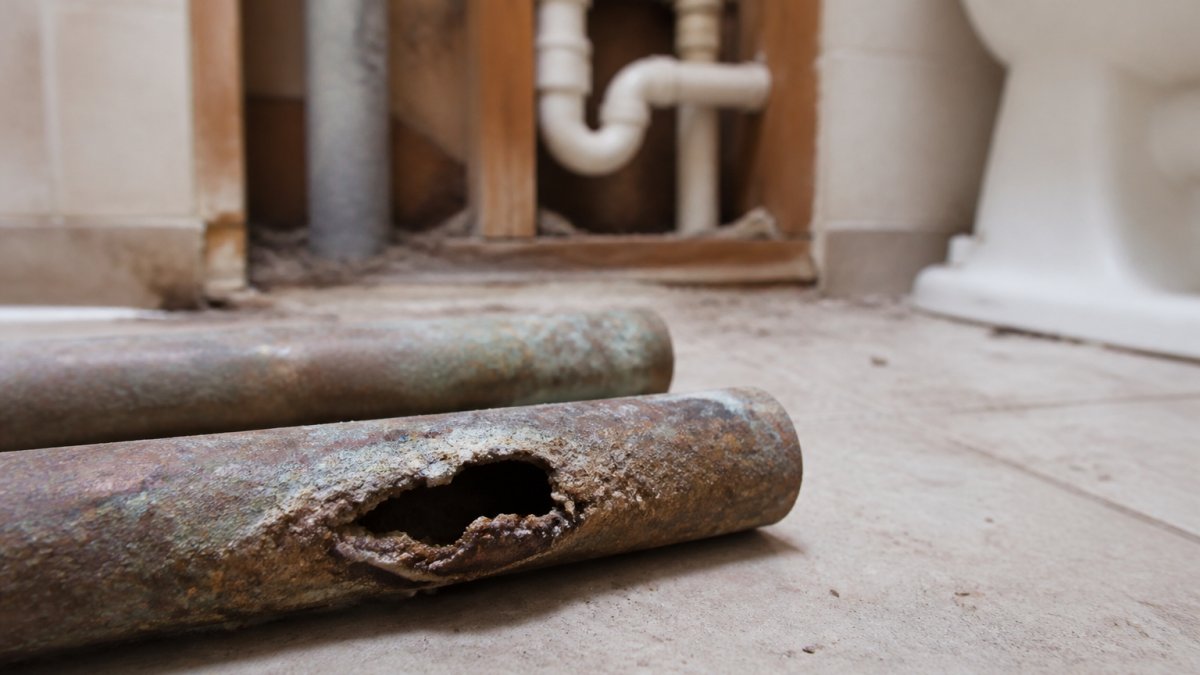
Discolored hot water deserves attention, especially if it is rusty or brown. Rust-colored water can indicate corrosion inside the tank or in the anode rod, and the problem tends to worsen over time. Check whether the discoloration appears only on hot water. If cold water runs clear, the water heater is the likely source.
A rotten-egg or sulfur smell in hot water often comes from bacteria reacting with the anode rod. Flushing the tank or replacing the rod sometimes resolves it. If the smell returns quickly or appears alongside discoloration, the tank may be near the end of its life.
Lukewarm Water, Shortages, and Noises From the Tank
Insufficient hot water, inconsistent temperatures, and lukewarm showers are common symptoms. Sediment buildup reduces the space heating water, so the unit runs longer and delivers less. Check the thermostat setting first, since a low setting can mimic a failing heater.
Unusual noises are another signal. Popping, rumbling, or knocking usually means sediment has hardened at the bottom of the tank, and the water trapped beneath it boils and crackles. A flush can sometimes help, but repeated noises after flushing suggest the tank is failing. Many homeowners ignore these sounds for months, which is one reason they end up with emergency calls.
Repair or Replace: A Practical Decision Framework
Not every problem requires a new unit, and the decision is easier when you weigh four factors together: age, repair cost, warranty status, and failure risk. Use the framework below rather than reacting to a single symptom.
Step 1: Estimate Remaining Life
Start with the unit's age and expected lifespan. Tank units typically last 8 to 12 years; tankless units often last 15 to 20. If the unit is past roughly 75 percent of its expected life, replacement usually wins over repair, because a repair buys only a short extension before the next failure. If the unit is young and the problem is a component, a thermostat, heating element, pressure relief valve, or loose fitting, repair is usually the better investment.
Step 2: Compare Repair Cost to Replacement Cost
A common rule of thumb among plumbers is that if a single repair costs more than about half the price of a new unit, replacement deserves serious consideration, especially on an older tank. Replacement and repair costs vary widely by unit type, installation requirements, and the specific failure. Pricing depends on the scope of work, so request a written quote from Resolution Plumbing that separates parts and labor before deciding.
Step 3: Factor In Warranty Status
If the tank is still under warranty, a covered failure may make repair or pro-rated replacement far cheaper than an out-of-warranty job. If the unit is out of warranty and past its expected life, paying for a major repair on a tank that is likely to fail again is usually poor value. Check both the tank warranty and the parts warranty, and confirm whether labor is covered.
Step 4: Weigh Failure Risk and Safety
Any gas odor, electrical concern, or active leak warrants prompt professional attention regardless of age, and a tank leaking from the bottom usually means internal corrosion that cannot be repaired. Beyond safety, consider the cost of an unexpected failure: water damage from a burst tank can far exceed the price of a planned replacement. A unit showing multiple warning signs at once, rust, noise, leaks, and inconsistent hot water, is a stronger replacement candidate than one showing a single symptom.
Step 5: Consider Efficiency and Model Type
Older units often use more energy than current models, and a newer unit may lower utility bills over time. Model type matters too: tankless units have different failure symptoms and lifespans than tank units, and gas and electric units fail in different ways (gas valves and venting versus heating elements and thermostats). If you are weighing a switch, comparing options in our tankless and traditional water heater guide can help you choose.
For current pricing on repair or replacement, check the Resolution Plumbing water heater repair service before deciding. If you have already decided replacement is likely, our guide to replacing a water heater covers what the process involves.
The article's four-factor framework can be summarised at a glance:
| Factor | What to check | Points toward |
|---|---|---|
| Age | Past roughly 75 percent of expected life | Replacement |
| Repair cost | More than about half the price of a new unit | Replacement |
| Warranty | Tank still covered; labor included | Repair or pro-rated replacement |
| Failure risk | Bottom-tank leak or gas odor | Prompt professional attention |
| Efficiency | Older units use more energy | Replacement |
Water Heater Maintenance and Flushing: Can It Extend Service Life?
Regular maintenance can extend the life of a water heater, though it cannot reverse age-related wear. Flushing the tank removes sediment, which helps the unit heat efficiently and reduces noise. Checking the anode rod and testing the pressure relief valve also make a difference.
A common mistake is assuming maintenance will fix a tank that is already corroded. Flushing can slow sediment buildup, but it does not repair cracks or leaks. Treat maintenance as protection for a healthy unit, not a cure for a failing one.
Booking Your Water Heater Assessment With Resolution Plumbing
If you are unsure whether your water heater needs replacing, a professional assessment gives you a clear answer. You can see what a replacement involves and what it costs before you book. Resolution Plumbing offers same-day appointments and emergency services, and provides upfront pricing. Our licensed and insured plumbers can inspect the unit, explain the options, and help you decide between repair and replacement. Contact us to request a visit or get a free estimate.
Frequently Asked Questions
How can I tell if my hot water heater needs to be replaced?
Look for several warning signs together: the unit is around 10 years old or older, the tank leaks or water pools at the base, the hot water is rusty or smells unusual, the supply runs out faster than it used to, or you hear popping or rumbling from the tank. A single minor symptom can sometimes be repaired, but leaks from the tank itself almost always mean replacement. If you are unsure, a licensed plumber can inspect the unit and tell you whether repair is worth it.
What is the typical life expectancy of a water heater?
Most conventional tank water heaters last roughly 8 to 12 years, and the unit's age is one of the strongest indicators of when replacement is near. Water quality, especially hard water, sediment buildup, and how often the tank is maintained all affect how long it lasts. Checking the manufacturer's label for the install date helps you track the unit's age and warranty status.
What should I do if my water heater is leaking from the bottom?
Shut off the power or gas supply to the heater first, then close the cold water inlet valve. If the leak is coming from the tank itself rather than a fitting or valve, the tank is usually failing and the unit needs replacement. If water is dripping from a pipe connection or the drain valve, a plumber may be able to repair it. Do not restart the heater until the leak source is identified.
Should I flush a 15-year-old water heater?
At 15 years old, a tank is past its typical service life, so flushing is unlikely to restore reliability and may reveal leaks that were hidden by sediment. Flushing can still help an older unit run more efficiently, but a licensed plumber should assess whether the tank is sound before you drain it. In many cases, replacement is the more practical choice at this age.