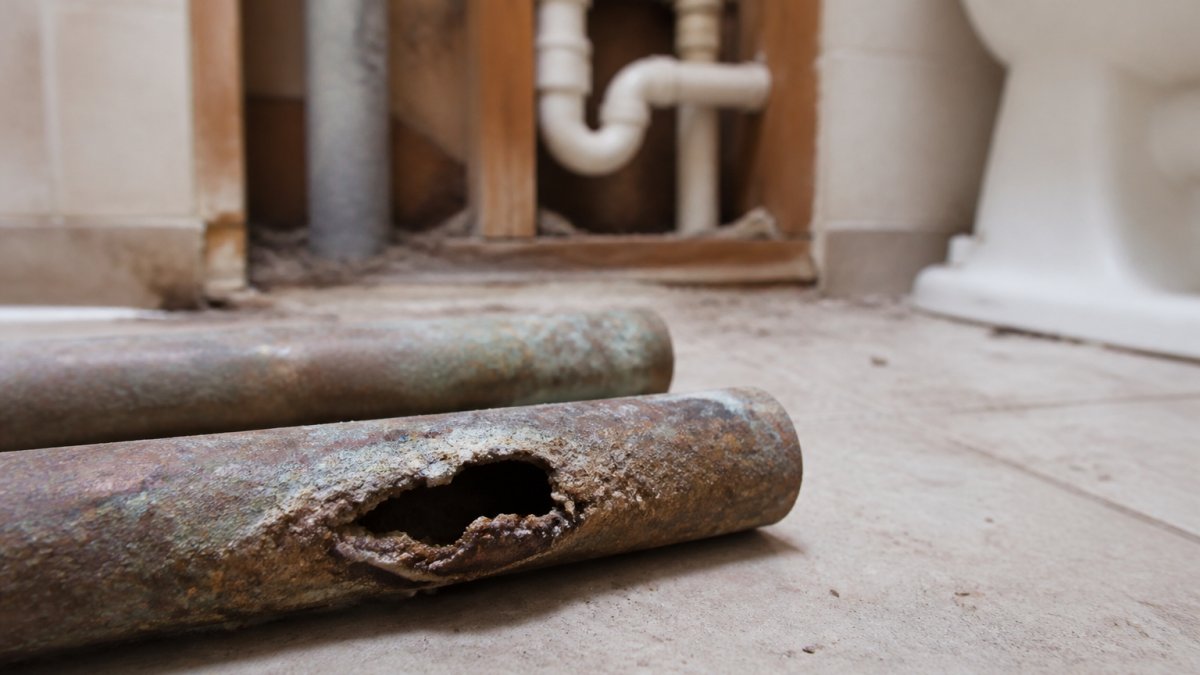
 how-to
How to Spot Why Your Las Vegas Pipes Fail Early
Last Updated: November 4, 2026
Quick Summary
Las Vegas pipes fail early mainly because of three stacked causes: polybutylene and galvanized steel that degrade from the inside out, hard water mineral scale that narrows the pipe and wears the inner wall, and pressure swings that stress joints and fittings. Homes built roughly from 1978 to 1995 may still have original polybutylene plumbing.
- Polybutylene was used in homes built roughly from 1978 to 1995 and often fails at the fittings.
- Repeated leaks in the same pipe run, rusty water, and falling pressure are signs a house needs repiping.
- A hose-bib gauge lets you read static pressure and catch the spike after a fixture shuts off.
- A pressure-reducing valve at the service entrance and a properly sized expansion tank address pressure damage.
- Three or more leaks in two years points to a repipe rather than another patch.
Table of Contents
- The Real Reasons Pipes Fail Early in Las Vegas Homes
- Signs a House Needs Repiping: What to Check First
- Polybutylene Pipes in Las Vegas Homes: The Hidden Failure Risk
- Hard Water, Mineral Scale, and Restricted Water Flow
- High Water Pressure and Pipe Leaks: The Pressure Wave Problem
- Water Softener Benefits for Plumbing and Water Heater Life
- Repair or Repipe? How to Decide With Your Plumber
- Get a Free Estimate Before the Next Leak
- Frequently Asked Questions
The Real Reasons Pipes Fail Early in Las Vegas Homes
Polybutylene pipe was used in homes built roughly from 1978 to 1995, and many of those homes are still standing with original plumbing (polybutylene use period and failure behavior).
Most homeowners blame age. Age is only part of it. The bigger story is what the water and pressure do to certain pipe materials over decades.
Three factors drive most premature plumbing failure here:
- Pipe material. Polybutylene and galvanized steel degrade from the inside out.
- Hard water. Mineral scale narrows the pipe and wears the inner wall.
- Pressure swings. Sudden spikes stress joints and fittings.
Get the diagnosis right and the repair becomes obvious. Get it wrong and you'll patch the same wall twice.
Signs a House Needs Repiping: What to Check First
The clearest signs a house needs repiping are repeated leaks in the same pipe run, rusty or discolored water, and a steady drop in water pressure. Any one of these points to a plumbing system near the end of its service life.
Start with a walk-through. You don't need tools for most of it.
Warning Signs You Can See and Hear
- Water that runs brown or yellow when you first turn on a tap
- Banging or hammering sounds when a fixture shuts off
- Damp patches on drywall, baseboards, or ceilings
- A water bill that climbs with no change in use
- Visible corrosion or green crust on exposed copper
- Slow drains across multiple fixtures, not just one
One slow drain is a clog. Slow drains everywhere suggest a pipe problem.
Safe Diagnostic Steps Before You Call a Plumber
You can check a few things without opening a wall.
- Read your water pressure. A gauge that screws onto a hose bib costs little and tells you a lot. Sustained pressure above the typical residential range stresses every joint in the house.
- Check the shutoff valve. If it won't close fully, you can't isolate a leak in an emergency.
- Look at exposed pipe. Check the basement, garage, and utility closet for corrosion, white crust, or green staining.
- Log the leaks. Write down where and when each one happened. A pattern is more useful than a single event.
Watch out: never open a wall or cut into a pipe to inspect it yourself. Pressurized lines can spray, and older fittings can fail the moment they're disturbed.
Polybutylene Pipes in Las Vegas Homes: The Hidden Failure Risk
Polybutylene was common in tract homes built in the late 1970s through the mid-1990s. The weak point is usually the fittings, not the pipe body.
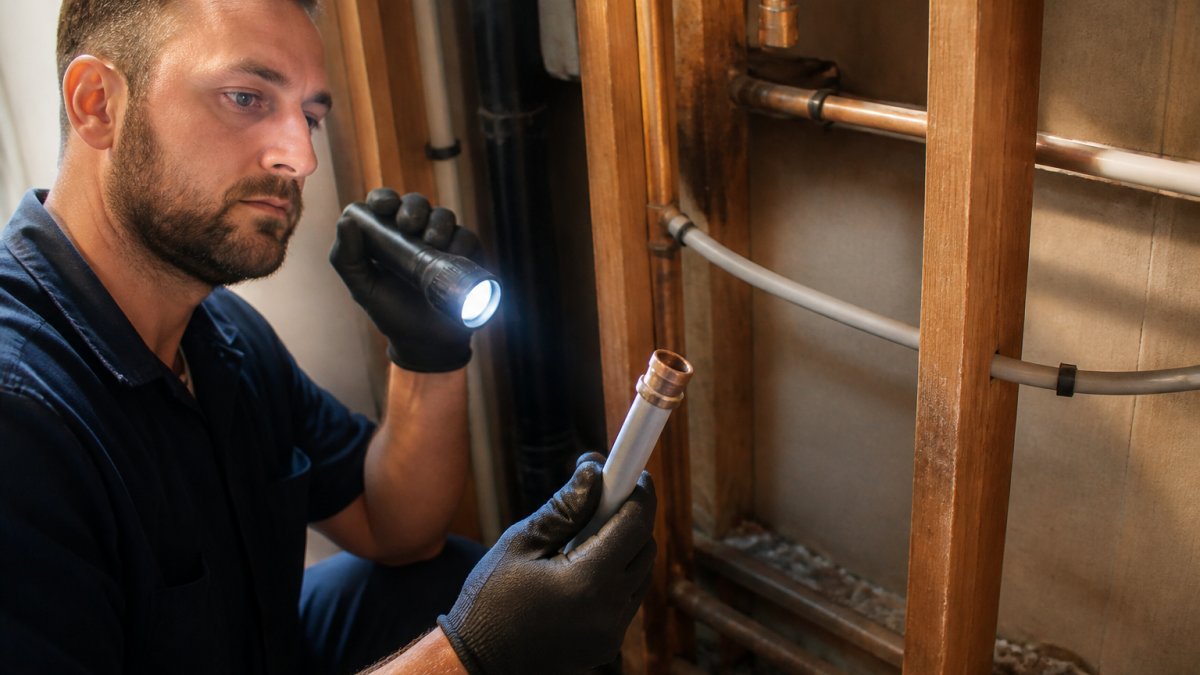
Here's what most guides miss: polybutylene often fails at the connection, so the leak starts small and hides.
If your home was built in that window, find out what's behind the drywall before you renovate.
Hard Water, Mineral Scale, and Restricted Water Flow
Hard water is the second major cause of early pipe failure, and it works slowly. Calcium and magnesium settle on the inner wall, and that mineral scale builds year after year.
How Mineral Buildup Chokes a Pipe From the Inside
Mineral buildup narrows the opening, so the same water volume has to push through a smaller gap. Pressure rises behind the restriction. Flow drops at the far end of the house.
The sequence looks like this:
- Minerals cling to the pipe wall.
- Scale hardens into a rough layer.
- The roughened pipe surface catches more sediment.
- Flow restriction spreads to more fixtures.
- Sediment buildup reaches the water heater and shortens its life.
That last step is the expensive one. Sediment collects at the bottom of the tank, reduces capacity, and can cause leaks.
Local plumbing sources point to mineral scaling and sediment as common contributors to restricted flow and heater trouble (hard water scaling and sediment effects). The fix isn't a stronger cleaner.
High Water Pressure and Pipe Leaks: The Pressure Wave Problem
High water pressure and pipe leaks go together more than most people realize. Every sudden shutoff sends a pressure wave through the system, and that wave hits the weakest joint first. The problem is that pressure damage looks a lot like age damage and hard-water damage, so homeowners often replace the wrong thing.
What Actually Happens Inside the Pipe
Think about a faucet slamming closed. Water moving through the pipe stops fast. The energy has to go somewhere, so it hammers the pipe wall and the fittings. This is water hammer, and it is a pressure spike, not a flow problem. Do that thousands of times over twenty years and something gives.
The mechanism matters because it tells you where to look. A pressure wave stresses:
- Joints and fittings first, because they are the mechanical weak points
- Solder connections on copper, which can crack under repeated flex
- Threaded galvanized fittings, which are already thinning from corrosion
- Valve seats and cartridges, which is why faucets start dripping after a pressure event
Distinguishing Pressure Damage From Age or Chemistry Damage
This is the part most guides skip. A leak is a symptom, not a cause, and the same drip can come from three different problems.
| What you observe | More likely cause | What it points to |
|---|---|---|
| Banging on shutoff, leaks at multiple fitting types | Pressure wave | High static pressure or missing expansion tank |
| Pinhole leaks on copper, green crust, clustered on one run | Water chemistry and velocity | Aggressive water or oversized pump |
| Rust-colored water, low flow at every fixture | Galvanized corrosion | Internal wall thinning, whole-run failure |
| Cracks at gray plastic fittings, no warning | Polybutylene fitting failure | Material-wide replacement |
| Leaks only after a fixture is used | Joint or fitting stress | Localized repair, then monitor |
If two or more rows apply, you likely have stacked causes. Pressure on top of corroded galvanized steel shortens the timeline dramatically.
How to Check Your Pressure Safely
A gauge that screws onto a hose bib is the right tool. Residential systems are designed around a typical pressure range, and sustained pressure above that range can stress joints throughout the house.
- Static reading. Attach the gauge, open the bib fully, and read with everything else off.
- Spike reading. Have someone shut off a nearby faucet quickly and watch the needle jump.
- Repeat at a second bib. A big difference between two hose bibs suggests a regulator or restriction problem.
Watch out: do not test pressure at the water heater drain valve or a fixture supply line. Those points are not rated for a full-system reading and can fail under test.
What Fixes It
A pressure-reducing valve at the service entrance sets a ceiling on static pressure. A properly sized expansion tank absorbs the shock when water heats and when valves close. Together they solve more of these cases than any single repair.
If you hear banging and also see rust-colored water, treat it as two problems. Fix the pressure first so the repair holds, then address the material.
Water Softener Benefits for Plumbing and Water Heater Life
The main water softener benefits for plumbing are fewer mineral deposits, steadier flow, and a longer service life for pipes and appliances. A softener removes the calcium and magnesium before they reach your pipes.
What that means in practice:
- Less scale. No mineral layer forms on the inner wall.
- Better flow. Pipes keep their full diameter.
- Longer heater life. No sediment blanket on the tank bottom.
- Less wear. Fixtures and valves stop crusting over.
- Fewer emergency calls. Softened water is easier on every joint.
A softener won't fix a pipe that's already failed. It's prevention, not repair. If your home already has polybutylene or badly scaled galvanized steel, treat the softener as part of the plan, not the whole plan.
Repair or Repipe? How to Decide With Your Plumber
The repair-versus-repipe decision comes down to three things: how much pipe is failing, what material it is, and how often you've called for leaks. Patch a single joint and you buy time. Patch the fifth joint in two years and you're wasting money. What most guides leave out is the service-life comparison that makes the decision concrete.
Expected Service Life by Material
These are general planning ranges, not guarantees. Actual life depends on water chemistry, pressure, installation quality, and how the system was maintained.
| Material | Typical service life | Common failure mode |
|---|---|---|
| Copper | Decades under good conditions | Pinhole leaks from chemistry and velocity |
| Galvanized steel | Shorter than copper, often the first to go | Internal corrosion and wall thinning |
| Polybutylene | Fails well before its expected life | Fitting cracks and joint separation |
| Cross-linked polyethylene (PEX) | Long service life in modern installs | Fitting and connection issues, not the pipe body |
| Chlorinated polyvinyl chloride (CPVC) | Long service life | Joint cement failure and brittleness over time |
Use the range as a planning tool. If the material in your wall is already past the low end of its range and you have had more than one leak, the rest of the system is on borrowed time.
The Decision Framework
| Situation | Better choice | Why |
|---|---|---|
| One leak, newer copper | Repair | Isolated failure, rest of system sound |
| Polybutylene anywhere in the home | Repipe | Material fails system-wide, not in one spot |
| Galvanized steel with low flow | Repipe | Corrosion is inside the whole run |
| Heavy scale, flow still okay | Softener plus monitoring | Address the cause before the damage spreads |
| Three or more leaks in two years | Repipe | Pattern says the system is done |
| Water heater replaced twice | Full inspection first | Sediment may be the real culprit |
Ask your plumber two questions before you approve anything. How much pipe is affected? And what's the expected service life of what's left? If the answer to the second is under ten years, a partial repair usually costs more over time.
What Drives the Estimate
Repiping estimates vary widely because the scope varies. The factors that move the number most are:
- Access. Pipe in a slab, behind finished drywall, or in a tight crawl space costs more to reach than pipe in an open basement.
- Material chosen. The replacement material and its fittings set the base cost.
- Number of fixtures and runs. More bathrooms and branches mean more labor.
- Permits and inspection. Required permits and inspections add cost and time.
- Drywall and finish repair. Patching and painting are often a separate line item.
- Water damage remediation. If a leak already spread, remediation is its own scope.
A quote that says "repair leak" tells you nothing about what gets replaced. Get the estimate in writing with the scope spelled out: which runs, which material, what gets opened, and what gets patched.
A Practical Way to Compare
Add up what you have spent on leak repairs over the last two years. If that number is climbing and the pipe material is past its typical range, a repipe is usually the lower long-term cost even though the upfront number is higher. If the leaks are isolated and the material is sound, repair and monitor.
Watch out: do not approve a partial repipe that leaves polybutylene or badly corroded galvanized steel connected to new pipe. The old section will fail at the transition and you will pay twice.
Get a Free Estimate Before the Next Leak
Water damage from a burst pipe rarely stays contained. It spreads into framing, insulation, and flooring, and the repair bill climbs fast. The smart move is to find the problem before it finds you.
At Resolution Plumbing, our licensed plumbers are fully licensed and insured, and we aim for upfront pricing with no hidden fees. Same-day appointments and emergency services are available, and our staff are background-checked.
Get a free estimate from Resolution Plumbing before the next leak turns into a weekend emergency.
Frequently Asked Questions
Why do pipes fail early in Las Vegas homes?
Three local conditions combine to shorten pipe life. Hard water leaves calcium and magnesium scale on the inner wall, which roughens the surface and restricts flow. Pressure fluctuations from the municipal supply stress joints and fittings. And many older tract homes still run original materials like polybutylene, used roughly from 1978 to 1995, or galvanized steel that corrodes from the inside. Any one of these wears a pipe faster than its rated lifespan; together they compound.
How can I tell if my home has polybutylene pipes?
Look for gray or light-blue plastic pipe, often stamped with the code PB2110, near your water heater, main shutoff, or under sinks. Polybutylene was installed in homes built roughly from 1978 to 1995 and connects with acetal fittings that can crack. Check your home inspection report or ask a licensed plumber to confirm. If you find it, have the joints inspected, since failure often starts at the fitting rather than the pipe body.
Does a water softener actually protect pipes from hard water?
A softener removes the calcium and magnesium that form mineral scale, so less deposit builds on the inner wall of your pipes and inside your water heater. That slows flow restriction and reduces sediment buildup that cuts heater capacity. It does not reverse damage already done, and it will not fix pressure-related joint failures. Think of it as prevention for the scale problem, paired with a pressure check for the rest.
Can high water pressure cause pipes to leak or burst?
Yes. Pressure above the normal residential range puts constant stress on joints, and sudden fluctuations send a pressure wave through the system that hammers fittings. Over time that leads to leaking pipes, joint failure, and eventually burst pipes. A plumber can attach a gauge to an outdoor hose bib and test your pressure in minutes. If it reads high, a pressure-reducing valve is a relatively inexpensive fix compared with water damage.
