 How-to
Do You Need a Water Softener in Las Vegas?
Last Updated: November 22, 2026
Quick Summary
You likely need a water softener in Las Vegas if you see water spots, white limescale on fixtures, soap that will not lather, dry skin and hair, stiff laundry, or reduced flow. Las Vegas water measures about 280 parts per million, or 16 grains per gallon, so softening is generally worth serious consideration above roughly 10 GPG.
- Test cold kitchen tap water with a strip or titration kit; the process takes about ten minutes.
- Below roughly 3 GPG is soft, 3 to 7 is moderately hard, and 7 to 10 is hard.
- A water softener removes calcium and magnesium through ion exchange, while filtration targets chlorine, sediment, and taste.
- Skip a softener if your hardness tests below about 7 GPG with no scale problems.
- Avoid testing water that has run through a softener or fridge filter, which gives a false low reading.
Table of Contents
- Signs You Need a Water Softener in Las Vegas
- How to Test Water Hardness at Home
- Water Softener Benefits and Drawbacks, Plus Softener vs Filtration
- Frequently Asked Questions
Signs You Need a Water Softener in Las Vegas
Las Vegas water is hard, and the signs you need a water softener in Las Vegas usually show up on your fixtures before they show up in your pipes. The Las Vegas Valley Water District reports hardness around 280 parts per million, or 16 grains per gallon, according to a Nevada Real Estate Group summary of the district's 2025 water quality report. At Resolution Plumbing, we see the results of that number every week: chalky faucets, cloudy glassware, and showerheads that spray sideways.
Hard water is water carrying dissolved calcium and magnesium (Hardness of Water). Those minerals are not a health problem. The Southern Nevada Water Authority's home treatment guidance states plainly that removing calcium and magnesium softens water but is not necessary to protect health. What they do affect is everything the water touches.
Look for water spots and streaky dishes, white limescale on fixtures, soap that will not lather, dry skin and hair, stiff faded laundry, reduced flow, and mineral buildup in appliances.
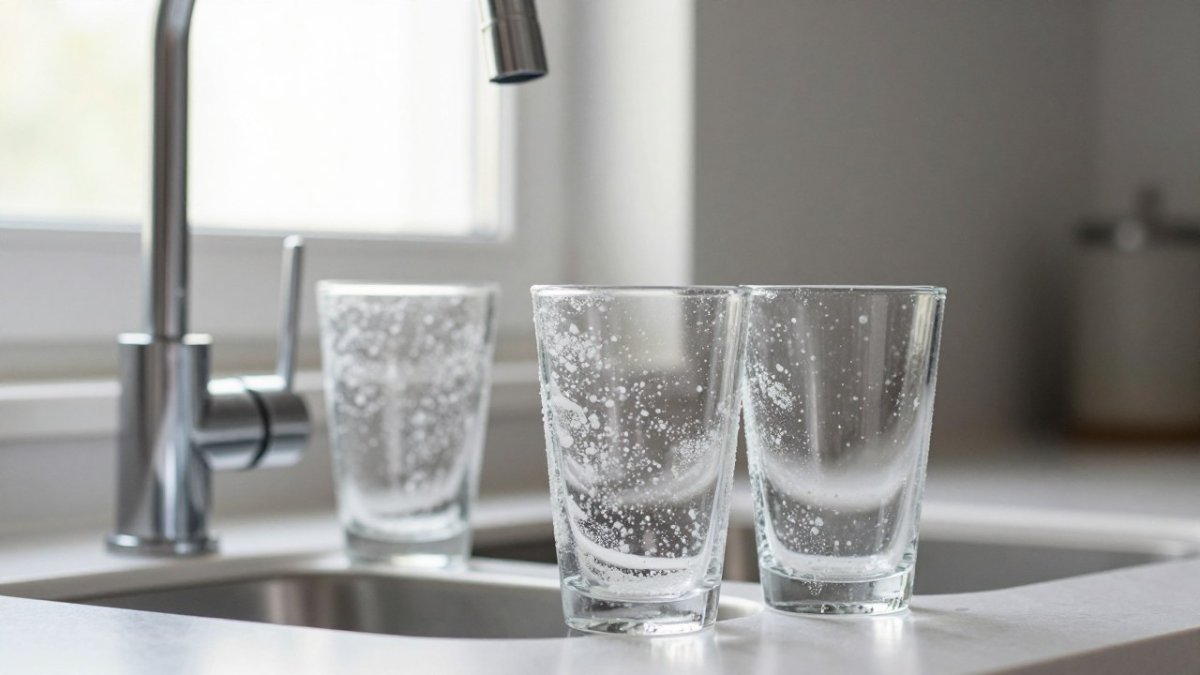
For cleanup, see our guides on how to fix hard water damage and reducing mineral buildup in your pipes.
How to Test Water Hardness at Home
You can test water hardness at home in about ten minutes with a test strip or titration kit, both giving a grains-per-gallon reading. Strips are cheap and fast; titration kits read more precisely.
What you need: a clean glass, cold tap water, and a test strip or kit.
- Fill a clean glass with cold kitchen tap water and let it sit a minute.
- Dip the strip for the time stated on the package, shake off excess, and match the color to the chart.
- Read the result in grains per gallon (GPG) or milligrams per liter, then test a second tap to see if results vary.
Reading the result: below roughly 3 GPG is soft, 3 to 7 is moderately hard, and 7 to 10 is hard. Above about 10 GPG, softening is generally worth serious consideration.
Two mistakes skew home tests: testing water that has run through a softener or fridge filter gives a false low reading, and testing only the kitchen cold tap misses the supply feeding your water heater and laundry. Testing the untreated supply at more than one tap helps you test water hardness accurately before deciding whether a softener is needed.
For more step-by-step walkthroughs, browse our how-to articles.
Water Softener Benefits and Drawbacks, Plus Softener vs Filtration
A water softener removes calcium and magnesium through ion exchange, while a filtration system targets contaminants like chlorine, sediment, and taste. They solve different problems, and many homes want both.
Benefits: soap and detergent lather with less product, fewer water spots, less scale on fixtures and the water heater, softer skin and hair, and laundry that stays softer and holds color longer.
| Factor | Water Softener | Filtration System |
|---|---|---|
| What it removes | Calcium and magnesium | Chlorine, sediment, taste, some contaminants |
| Main benefit | Stops scale and improves soap lather | Improves taste and drinking water quality |
| Ongoing cost | Salt and regeneration water | Filter cartridge replacement |
| Best for | Whole-home scale protection | Drinking water and taste concerns |
Best for: homes with visible scale, spotted dishes, and repeated fixture replacements. Skip if: your hardness tests below about 7 GPG with no scale problems.
If a softener is worth it, our article on choosing expert water softener installation covers what to ask before you sign.
Hard water in Las Vegas will keep working on your fixtures and water heater whether or not you act. Resolution Plumbing offers upfront pricing with no hidden fees, same-day appointments, and water treatment system installation tailored to local conditions. Get started with Resolution Plumbing and get a straight answer on whether a softener is right for your home.
Frequently Asked Questions
Is a water softener necessary in Las Vegas?
Not for health, but often for the home. Removing calcium and magnesium softens water but is generally not necessary to protect health. Softening is generally worth serious consideration above about 10 grains per gallon, and Las Vegas water is commonly cited at around 16 grains per gallon, well above that line. Whether a water softener is worth it comes down to how much scale, spotting, and appliance buildup you are willing to live with.
What are the downsides of having a water softener?
Softened water adds sodium and sends extra salt-laden water to the drain during regeneration, so some households keep a separate drinking-water tap. Systems also take up space, need salt refills, and require ongoing maintenance. The water softener benefits and drawbacks are worth weighing against your actual hardness level before you commit, since a household below roughly 10 grains per gallon may not see enough difference to justify the cost and upkeep.
How do I choose between a water softener vs water filtration system?
They solve different problems. A softener removes the calcium and magnesium that cause scale, spots, and stiff laundry. A filtration system targets taste, odor, and contaminants but does not remove hardness minerals. Many Las Vegas homes run both: a softener for the whole house and a filter at the kitchen tap for drinking water. Test your hardness first, then decide which problem you are actually trying to fix.