 Ultimate guide
The Property Manager's Guide to Commercial Plumbing Maintenance
Last Updated: November 14, 2026
Quick Summary
Commercial plumbing maintenance for rental properties is the scheduled inspection, testing, cleaning, and repair of every water, drain, and fixture system across a rental portfolio, done on a recurring calendar rather than after a failure. Build a written checklist grouped by frequency, assign each task to staff or a licensed plumber, and document every completed task with a dated record.
- Monthly tasks include checking for visible leaks, testing shutoff valves, running fixtures, and logging water-meter readings.
- Quarterly tasks typically require a licensed plumber, including relief valve inspection and backflow assembly testing.
- Most commercial leases assign main water service, sewer and common lines, and the building water heater to the landlord.
- A service contract should be evaluated on scope, pricing structure, response terms, and licensing and insurance.
- Smart leak sensors and submeters catch hidden leaks early and reveal usage patterns that point to problems.
Table of Contents
- Why Commercial Plumbing Maintenance Protects Rental Property Value
- The Commercial Plumbing Maintenance Checklist Every Property Manager Needs
- What a Commercial Plumbing Inspection Covers
- Commercial Plumbing Repair Responsibilities in a Lease
- Common Plumbing Problems in Rental Properties
- Commercial Plumbing Emergency Response Planning
- How to Evaluate a Commercial Plumbing Service Contract
- Records, Water Efficiency, and Leak Monitoring That Pay Off
- Booking Your First Commercial Plumbing Maintenance Visit
- Frequently Asked Questions
Why Commercial Plumbing Maintenance Protects Rental Property Value
Commercial plumbing maintenance for rental properties is the scheduled inspection, testing, cleaning, and repair of every water, drain, and fixture system across a rental portfolio, done on a recurring calendar rather than after a failure. A slow leak under a slab or a failing shutoff valve rarely announces itself; it quietly damages flooring, drywall, and tenant relations until the repair bill dwarfs what a scheduled inspection would have cost. Property managers who run preventive programs protect building value, reduce emergency service calls, and keep units rentable. Below, we'll show you exactly how to build that program, from the checklist to the service contract to the first inspection visit. A consistent inspection schedule also helps prevent small leaks and drainage problems from becoming costly structural repairs, making preventing water damage in commercial buildings a natural extension of routine plumbing maintenance.
The Commercial Plumbing Maintenance Checklist Every Property Manager Needs
A commercial plumbing maintenance checklist is a written schedule of tasks grouped by frequency and assigned to either your staff or a licensed plumbing contractor. The value comes from consistency: the same tasks, the same intervals, the same documentation, every cycle. A checklist works best when each line names the task, the interval, the person responsible, and the record that proves it was done.
Monthly, Quarterly, and Annual Tasks
Monthly tasks are quick visual passes your on-site staff can handle. Quarterly tasks typically require a licensed plumber. Annual work covers the systems nobody thinks about until they fail.
- Monthly: check for visible leaks under sinks and at supply lines, test shutoff valves, run every fixture, note slow drains, and log water-meter readings against prior months to spot unexplained increases
- Quarterly: inspect water heater temperature and pressure relief valves, test backflow prevention assemblies, camera or snake main lines showing repeat clogs, and exercise shutoff valves in low-use areas so they do not seize
- Annually: flush water heaters, inspect the full water distribution system, review lateral lines, audit fixture condition unit by unit, and update the asset inventory with install dates and service history
A Preventive Maintenance Calendar by Property Type
Different buildings fail in different ways, so the calendar should match the property. Build the calendar around occupancy patterns and water volume, not a generic template.
Multifamily buildings. High turnover drives fixture wear. Schedule a fixture and supply-line check at every unit turnover, quarterly common-line drain cleaning, and annual water heater flushing per unit. Shared risers and common lines need camera inspection on a set interval because one tenant's habits affect everyone downstream.
Office buildings. Low water use is the enemy of valves and traps. Exercise shutoff valves quarterly so they do not seize, run floor drains and traps monthly to keep seals wet, and inspect restroom fixtures on a monthly pass. Water heaters in offices often sit idle; check relief valves and venting quarterly.
Mixed-use buildings. Split the calendar by zone. Retail or food-service tenants need more frequent drain cleaning on common lines and grease-producing fixtures, while upper-floor residential units follow the multifamily schedule. Common-area restrooms and shared lines need a monthly visual pass because they serve the highest traffic.
Retail centers. Tenant mix drives the plan. Food-service tenants warrant quarterly drain cleaning and grease management checks; apparel and office tenants need only the standard quarterly fixture and valve inspection. Common-line camera inspection annually catches buildup before it becomes a shared-cost emergency.
Who Performs Each Task and How It Is Documented
Assign every checklist line to a named role: on-site staff, property manager, or licensed plumber. Staff handle visual passes and meter readings; licensed plumbers handle valve testing, backflow testing, camera inspection, and water heater service. Each completed task should produce a dated record, a photo, a signed work order, or a line in the maintenance log, so the next cycle starts from evidence rather than memory.
Watch out: a checklist that is not tied to a named owner and a dated record quietly becomes a list nobody completes, and the gaps only surface when a failure lands in an invoice.
If you're deciding whether scheduled drain work belongs in your program, professional drain cleaning for businesses explains the maintenance schedules involved.
What a Commercial Plumbing Inspection Covers
A commercial plumbing inspection is a documented assessment of the building's entire water and drainage system, performed by a licensed plumber and delivered as a written report with photos and prioritized findings. It goes far beyond "looking under the sinks."
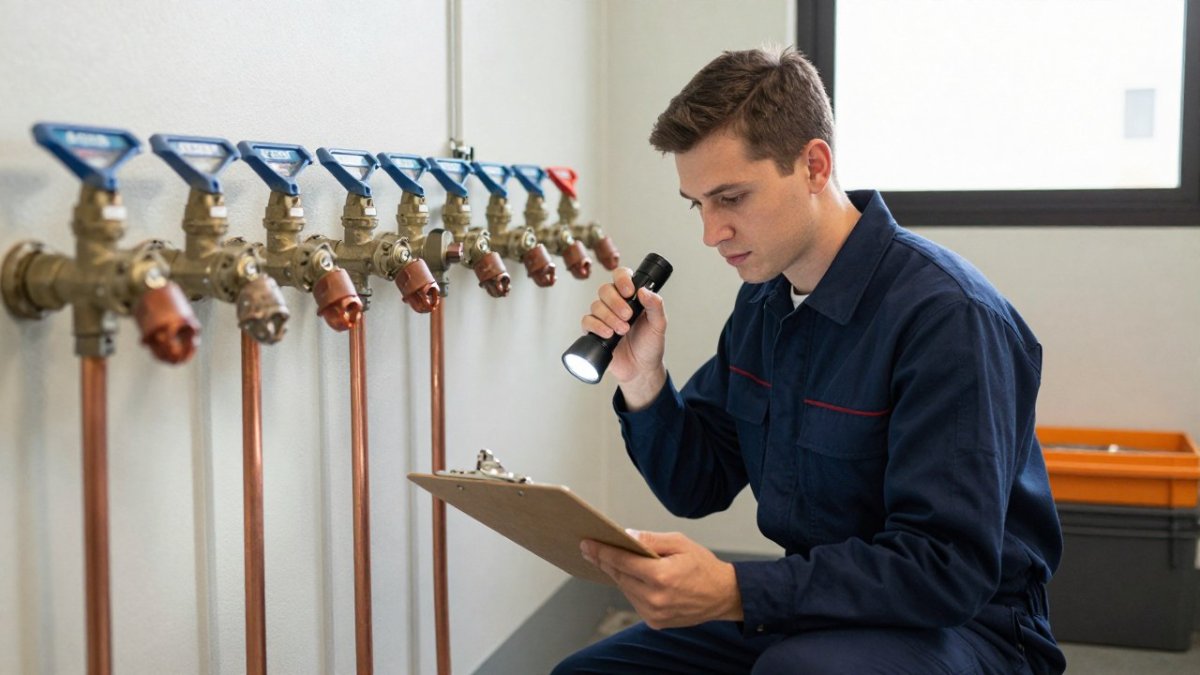
The inspection covers water supply and distribution, including pipe condition, pressure, and valve operation. It covers drainage, including common lines, lateral lines, and sewer connections. It tests backflow prevention assemblies, checks water heater condition and venting, verifies fixture function in every unit, and looks for hidden leaks behind walls and under slabs using moisture detection. Findings are ranked by risk so you know what to fix now and what to watch.
Commercial Plumbing Repair Responsibilities in a Lease
Repair responsibility in a commercial lease is determined by the lease language, not by habit, and the split usually follows the boundary between the building's core systems and the tenant's premises. Get this wrong and you'll argue over invoices for years.
Landlord Versus Tenant: Who Fixes What
Most commercial leases assign structural and common-area plumbing to the landlord: the main water service, sewer and common lines, and the water heater serving the building. Tenants typically handle fixtures and stoppages inside their own space, such as a clogged toilet or a failed faucet. Watch out: a lease that's silent on a specific system defaults to ambiguity, and ambiguity favors whoever is holding the invoice.
Common Plumbing Problems in Rental Properties
The same handful of failures drive most service calls in rental and commercial units. Clogged drains top the list, usually from grease, wipes, or hair. Running toilets and worn flappers waste water silently (the EPA). Hidden leaks under slabs or behind walls cause water damage before anyone notices. Aging water heaters fail without warning, and hard water accelerates scale buildup in pipes and fixtures. Shared common lines in multi-unit buildings clog faster because one tenant's habits affect everyone downstream.
Commercial Plumbing Emergency Response Planning
A commercial plumbing emergency response plan is a written procedure that tells tenants and staff exactly who to call, what to shut off, and how fast a licensed plumber will arrive. The plan should name the shutoff valve locations for every unit and common area, list the after-hours contact, and set a response-time target in writing. Post a one-page version in each unit and the management office. The goal is to stop water at the source within minutes and get a plumber on site the same day, not to have staff improvising at 6 p.m. on a Sunday.
How to Evaluate a Commercial Plumbing Service Contract
A commercial plumbing service contract is a maintenance agreement that specifies what's inspected, how often, what's included in the fee, and what triggers an extra charge. Evaluate it on four criteria:
- Scope: list every task, frequency, and system covered
- Pricing structure: confirm whether pricing is upfront and quoted before work begins
- Response terms: get the emergency response window in writing
- Licensing and insurance: verify the license number and coverage
Before signing with any provider, it's worth understanding why upfront pricing matters for plumbing repairs so you can spot a contract that leaves room for surprise charges.
| Contract Element | What to Look For | Red Flag |
|---|---|---|
| Scope | Named tasks and frequencies | Vague "as needed" language |
| Pricing | Upfront quotes before work | Open-ended hourly billing |
| Response time | Written emergency window | Verbal promises only |
| Credentials | License number and insurance | Cannot produce either |
Records, Water Efficiency, and Leak Monitoring That Pay Off
Plumbing asset inventories and recordkeeping turn maintenance from guesswork into planning. A working inventory lists every water heater, backflow assembly, shutoff valve, and fixture group by unit or zone, with install date, make and model, warranty term, service history, and any recurring defect. That history tells you which fixtures are nearing end of life and which buildings need capital planning, and it protects you when a tenant disputes a charge.
Building the Asset Inventory
Start with the systems that fail most expensively: water heaters, main and zone shutoff valves, backflow assemblies, and common-line drain runs. Record the install date and expected service life for each so replacement can be scheduled rather than reacted to. Note pipe materials by zone, older galvanized or polybutylene runs behave differently from copper or PEX and should be flagged for closer inspection. Keep the inventory in the same system as work orders so every repair updates the record automatically.
Linking Records to Maintenance Budgets
A documented inventory is what makes a maintenance budget defensible. Group assets by expected remaining life and plan replacement in the year it comes due rather than the year it fails. Compare the cost of scheduled service against the cost of emergency repair and water damage for each asset class; most practitioners find the scheduled path is the lower total cost once damage and downtime are counted. Present the plan to ownership as a multi-year schedule, not a single-year ask, so reserves can be set aside in advance.
Water Efficiency and Leak Monitoring Technology
Smart leak sensors on main lines, under sinks, and near water heaters catch hidden leaks early and send alerts before damage spreads. Submeters on individual units or zones reveal usage patterns that point to running toilets, silent leaks, or irrigation problems. Water-efficient fixtures, low-flow toilets, aerators, and high-efficiency water heaters, cut both consumption and strain on the system. Pair the technology with the checklist: a sensor alert should trigger a work order, and a meter spike should trigger an inspection, so monitoring feeds the maintenance cycle instead of sitting in a dashboard.
Recordkeeping That Supports Compliance
Keep backflow test results, inspection reports, and service records in one place and retain them for the period your local authority requires. When an inspector or a tenant asks for proof of maintenance, the record should be retrievable in minutes, not reconstructed from memory.
Watch out: an inventory that is never updated after a repair becomes a liability, because it tells you a fixture is newer than it is and skews every replacement decision that follows.
Booking Your First Commercial Plumbing Maintenance Visit
Start with one building and one inspection. Ask for a written report with photos, a prioritized repair list, and a proposed maintenance calendar. Confirm the plumber's license and insurance before anyone arrives, and get the scope and pricing in writing. For guidance on vetting a provider, how to find licensed plumbers walks through the checks that matter. At Resolution Plumbing, we're a family-owned company with fully licensed and insured plumbers, and we offer upfront pricing with no hidden fees.
The difference between a plumbing program that protects your portfolio and one that just reacts to emergencies comes down to scheduling and documentation. Resolution Plumbing handles recurring maintenance and emergency repairs for rental properties across the metro area, with same-day appointments, upfront pricing, and background-checked, drug-tested technicians. Get started with Resolution Plumbing and put a licensed maintenance calendar behind every unit you manage.
Frequently Asked Questions
What should a commercial plumbing maintenance plan include for rental properties?
A solid plan covers scheduled inspections of water supply lines, drainage and common lines, water heaters, and fixtures, plus a written commercial plumbing maintenance checklist completed on a set cadence. It should name response times for repairs, list who handles emergencies after hours, and include recordkeeping for every service call.
How often should plumbing be inspected in a commercial rental property?
Most commercial rental properties benefit from a routine inspection once or twice a year, with high-occupancy buildings or older plumbing systems checked quarterly. Fixtures and shutoff valves get a quick walkthrough monthly by on-site staff, while water heaters and backflow prevention devices follow manufacturer and local code schedules. A commercial plumbing inspection at least annually catches hidden leaks and slow drains before they become water damage claims.
Who is responsible for plumbing repairs in a commercial lease?
It depends on the lease terms, so read the repair clause before signing. Many commercial leases put structural systems and common lines on the landlord, while tenants handle fixtures they damaged or appliances they installed. Clear commercial plumbing repair responsibilities in writing prevent disputes. Have an attorney review the maintenance and repair section, and document the condition of the plumbing system at move-in with photos and a signed inspection report.
What plumbing issues should tenants report immediately?
Tenants should call the same day for active leaks, sewage backups, no hot water, overflowing toilets, or any water where it should not be. These escalate into costly damage fast, especially in multi-unit buildings where one leak can reach several units. Give tenants a simple reporting channel and a written list of what counts as an emergency, and set a response target for your commercial plumbing emergency response plan.
How can property managers prevent recurring drain problems?
Recurring clogs usually trace back to what goes down the drain, not bad luck. Post signage in restrooms and break rooms, schedule routine drain cleaning on kitchen and common lines, and have a plumber camera the line if the same drain backs up twice in a year. A commercial plumbing maintenance plan that includes periodic jetting of grease-prone lines stops repeat service calls and protects the lateral line from bigger failures.
What records should landlords keep for plumbing maintenance?
Keep inspection reports, service call invoices, repair photos, water heater install dates, backflow test certificates, and warranty paperwork for every unit. An asset inventory listing each fixture, water heater, and shutoff valve with its age and model number makes lifecycle planning far easier. These records also support code compliance documentation and help you compare estimates when you request multiple bids for larger work.